How top Meta advertisers are solving the creative bottleneck — without hiring a bigger team
By Ashar Jalani, Growth Marketer @ DIGIaiX
The real reason your ROAS is stalling
Every media buyer knows the feeling: a campaign launches strong, CTR is healthy, cost per result is under target — and then, within a week, it all starts sliding. Frequency creeps up, the same faces and hooks keep hitting the same audience, and Meta’s algorithm quietly raises your CPMs in response.
This isn’t a targeting problem or a bidding problem. It’s a creative supply problem.
Meta’s ad auction rewards freshness. Every account that scales past a certain spend threshold hits the same wall: the algorithm needs more creative variety than a small team can physically produce. Briefing, shooting, editing, and testing a single new ad concept the traditional way can take three to five days. By the time it’s live, the account has already been running on fumes for most of that week.
Industry benchmarks put the damage at roughly a 63% average CTR decline once an audience has been exposed to the same creative for five days or more. That single number is often the difference between an account that scales and one that plateaus.
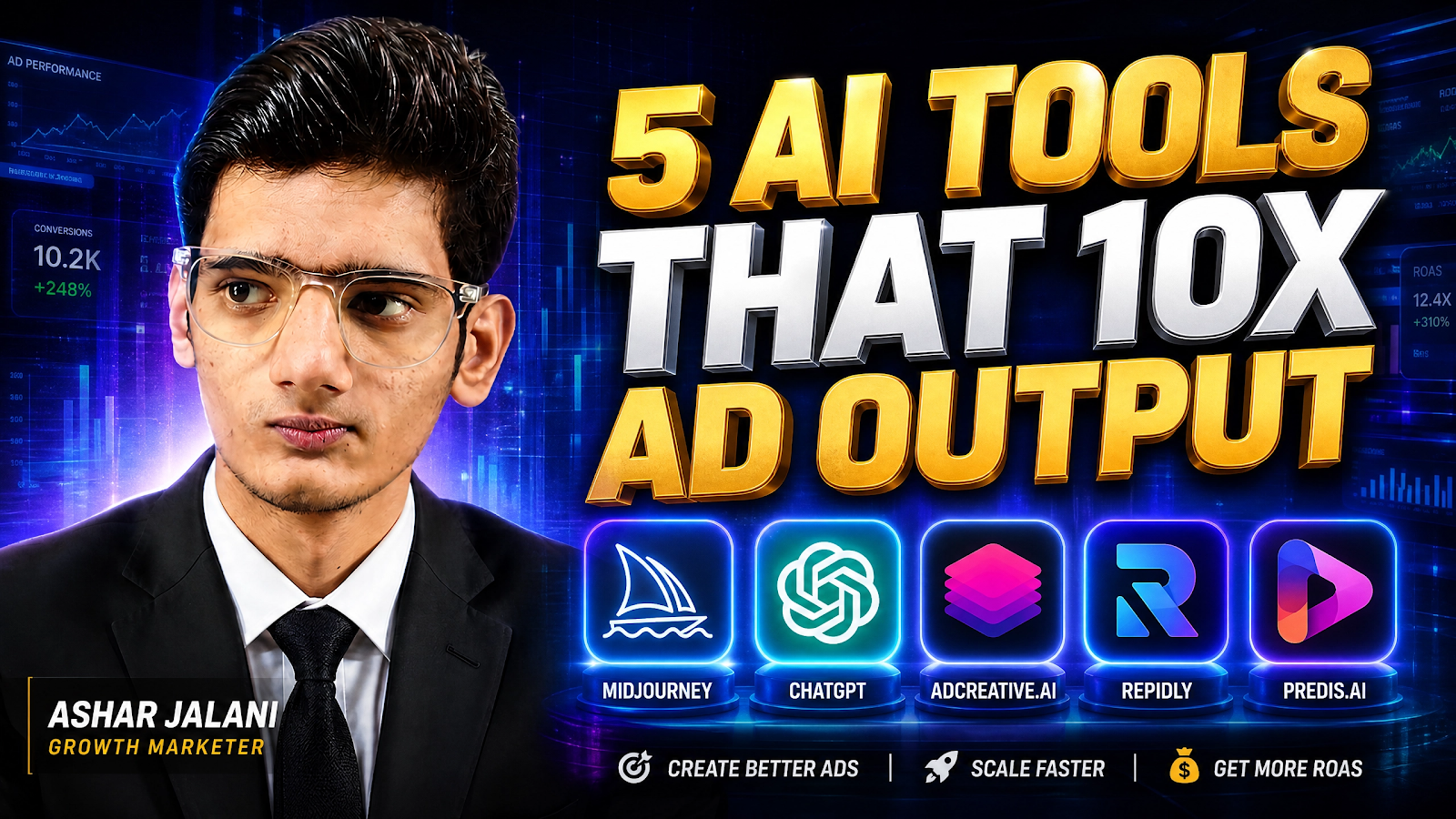
The advertisers who’ve broken through this ceiling in the last two years haven’t done it by hiring bigger creative teams. They’ve done it by building an AI-assisted creative pipeline — a repeatable system that compresses a multi-day production cycle into a few hours. Below is the exact five-tool stack behind that shift, and how the pieces fit together.
Tool 1 — Midjourney: Static Visuals at the Speed of Thought
Static image ads are still the backbone of most Meta accounts — cheaper to produce, faster to test, and often the highest-ROAS format for cold traffic. The bottleneck has always been production: a proper product shoot or custom design pass takes days and a budget most small teams don’t have.
Midjourney collapses that timeline. Feed it a prompt describing your product, audience, and visual mood, and it returns polished, on-brand imagery in minutes — no photographer, no studio, no stock photo compromises.
Best for: thumb-stopping static image ads, background scenes for product composites, and rapid visual variation testing.
Practical tip: Don’t ask Midjourney to design the whole ad. Use it to generate the background or hero visual, then layer your product shot, headline, and CTA on top in a design tool. This keeps your branding consistent while still getting the creative speed.
Tool 2 — AdCreative.ai: Turning One Asset Into Twenty
Once you have a strong visual or product photo, the next bottleneck is variation. Meta’s algorithm needs multiple angles, layouts, and copy pairings to find what resonates — testing one ad at a time is too slow.
AdCreative.ai takes your existing brand assets (logos, product shots, colors) and automatically generates dozens of conversion-focused ad variations, each scored by a predicted-performance model before you even spend a dollar testing it.
Best for: fast creative testing at scale — going from one static asset to a full test matrix in an afternoon.
Practical tip: Use the performance score as a pre-filter, not a final verdict. Launch your top 5–8 predicted performers rather than everything the tool generates; volume without a scoring layer just burns testing budget.
Tool 3 — Runway ML: Video Ads Without a Camera Crew
Video consistently outperforms static creative on Meta for engagement and watch-through, but it’s historically been the most expensive format to produce — a UGC-style ad alone can cost hundreds of dollars and days of coordination with a creator.
Runway ML generates short-form video content directly from text or image prompts, including UGC-style clips and B-roll, cutting both the cost and the timeline dramatically.
Best for: scroll-stopping video ad creative, especially for testing new angles before committing budget to a full creator shoot.
Practical tip: Use AI-generated video for early-stage angle testing — find out which hook and story resonate before you invest in a real creator shoot for your winning concept. This is where most teams get the best ROI from AI video today.
Tool 4 — ElevenLabs: Voiceovers That Don’t Sound Like Robots
A weak voiceover can sink an otherwise strong video ad. Traditional voice talent is expensive and slow to iterate on, especially if you’re testing multiple scripts or expanding into new markets and languages.
ElevenLabs generates natural, human-sounding voiceovers in dozens of languages and accents, letting you test different tones (energetic, calm, authoritative) on the same script in minutes.
Best for: fast multilingual ad voiceovers and rapid script iteration without booking studio time.
Practical tip: If you’re scaling into international markets, this is the highest-leverage tool on the list — localizing a proven video ad into three new languages used to take a week; it now takes an afternoon.
Tool 5 — Claude / Copy.ai: Hooks and Angles at Volume
Visuals get the click, but copy determines whether it converts. The advertisers who scale fastest aren’t the ones with the single best headline — they’re the ones testing the most angles: pain-point-led, curiosity-led, social-proof-led, offer-led, and so on.
Claude and Copy.ai can generate dozens of hook, headline, and body copy variations in your brand voice in a single prompt, giving you a real testing matrix instead of three tired variations of the same idea.
Best for: hooks, angles, and headline testing at a volume no single copywriter can match manually.
Practical tip: Don’t just ask for “ad copy.” Prompt for copy against specific angles (e.g., “write 5 hooks using a problem-agitate-solve structure” vs. “write 5 hooks using social proof”) — this is what actually produces creative diversity instead of five near-identical variations.
The Real Unlock: It’s a Pipeline, Not a Toolbox
Here’s the part most breakdowns of “AI marketing tools” miss: no single tool on this list moves the needle much on its own. Generating one AI image, or one AI voiceover, is a novelty. The advertisers actually scaling with this stack have turned it into a repeatable production line:
- Copy — Claude/Copy.ai generates the hook and script angles
- Visual — Midjourney generates the supporting imagery
- Video — Runway ML turns the concept into short-form video
- Voice — ElevenLabs adds a natural voiceover
- Assemble — AdCreative.ai packages it all into dozens of test-ready variations
Run end to end, this turns what used to be a 3-day creative cycle into roughly a 3-hour one — without adding headcount.
Proof: The 3-3-3 Framework in Practice
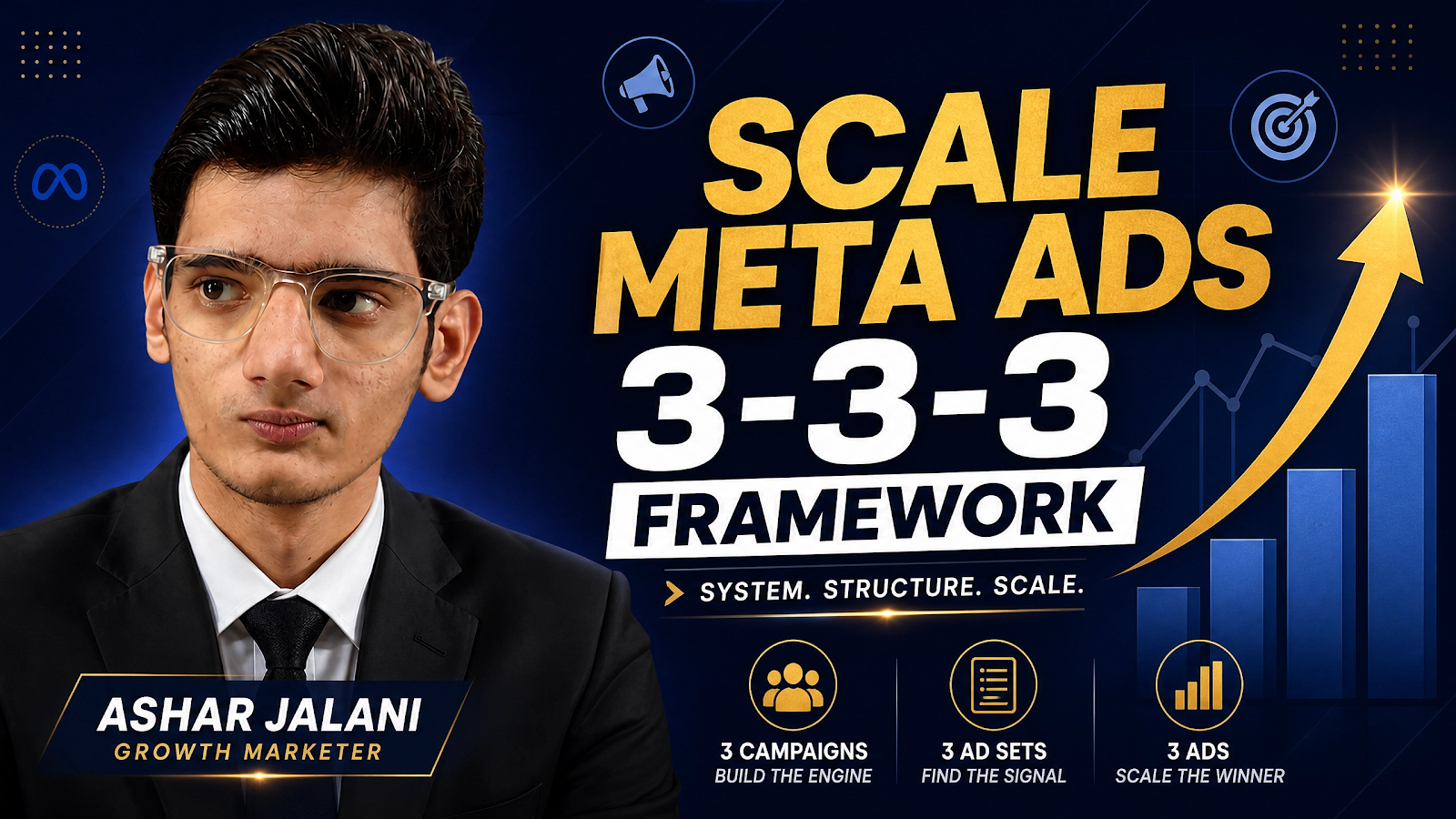
Applying this pipeline with a simple testing structure — 3 hooks × 3 angles × 3 formats — produced the following results on a recent Meta ad account:
The lift didn’t come from a smarter bid strategy or a new audience segment. It came from feeding Meta’s algorithm the volume and variety of fresh creative it was starving for — at a fraction of the traditional cost and timeline.
Where to Start If You’re Doing This Manually Today
If your current process is “one designer, one video editor, one copywriter, working sequentially” — you don’t need to rebuild your whole workflow overnight. Start with the single biggest bottleneck:
- If your creative feels visually stale → start with Midjourney + AdCreative.ai
- If video is your weak format → start with Runway ML + ElevenLabs
- If your ads all sound the same → start with a proper copy-angle framework in Claude or Copy.ai
Layer in the rest of the pipeline once the first piece is working. The goal isn’t to replace your creative team — it’s to remove the production ceiling that’s currently capping how much you can test, and how fast.
Ashar Jalani is a Google-Certified Growth Marketer helping brands scale Meta ad accounts with AI-powered creative systems. Connect with him at DIGIaiX.