The four root causes quietly capping your ROAS — and a diagnostic framework to fix each one
By Ashar Jalani, Growth Marketer @ DIGIaiX
The plateau looks the same in almost every account
There’s a specific moment every media buyer recognizes. The account was scaling. CPA was stable, ROAS was healthy, and then — without any obvious trigger — growth just stops. Spend keeps climbing, but results stop following it.
It rarely happens overnight. It creeps in through the same three warning signs, in nearly identical order, in almost every account I’ve audited:
- Cost per result climbs steadily, even though daily spend hasn’t changed.
- Frequency creeps past 3–4, while reach barely grows.
- CTR keeps sliding, no matter how many small bid or budget tweaks you make.
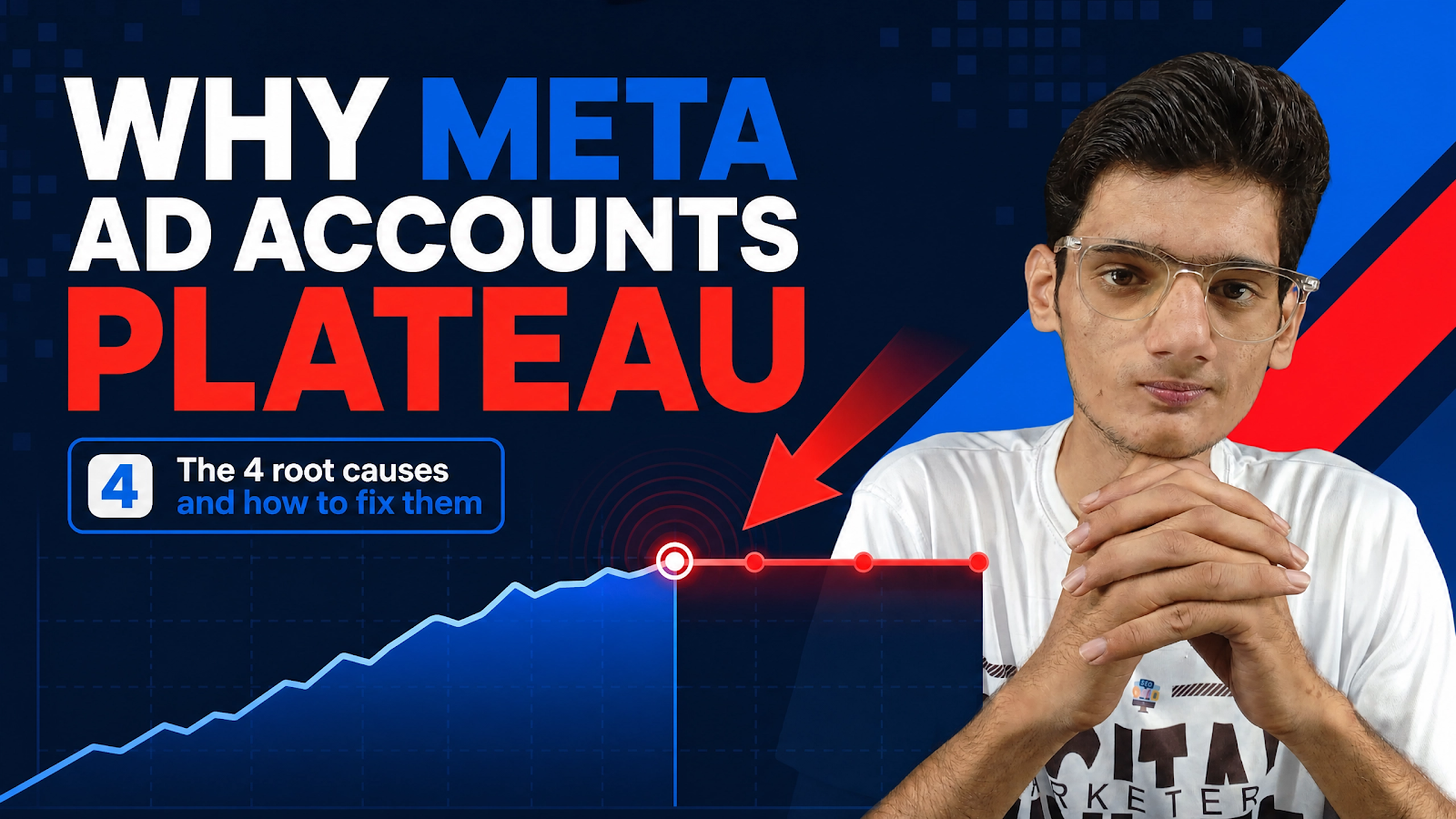
Most scaling Meta accounts hit their first real plateau somewhere in the 60–90 day window. And in almost every case, it comes down to one (or more) of four root causes — not bad luck, not a “dead” account, not the algorithm turning against you.
Here’s the breakdown.
Cause 1 — Creative Fatigue
The problem: Running the same two or three ads for weeks straight. Meta’s algorithm actively rewards fresh creative and quietly raises your CPMs to punish repetition — it’s baked into how the auction works, not a punishment specific to your account.
Signs to watch for:
- CTR declining week over week on the same ad set
- Frequency climbing above 3.5 without a corresponding sales lift
- Comments and engagement dropping on ads that were previously strong performers
The data point that matters here: average CTR declines by roughly 63% after just five days of repeated exposure to the same creative. That’s not a slow fade — it’s a fast one, and it’s the single most common cause of plateaus I see in accounts spending under $10K/month.
Cause 2 — Audience Saturation & Overlap
The problem: Too many narrow ad sets targeting overlapping audiences — which means your own campaigns are quietly bidding against each other inside Meta’s auction. You’re not just fighting competitors for placement; you’re fighting yourself.
Signs to watch for:
- CPMs rising even though your audience size hasn’t changed
- Multiple ad sets consistently reaching the same people (checkable via Meta’s audience overlap tool)
- Frequency climbing account-wide, not just in one isolated campaign
Why it happens: it’s a natural byproduct of “more is better” account structure — teams add new ad sets to test new angles without ever consolidating old ones, and the overlap compounds quietly over months. Accounts with meaningful audience overlap commonly see 20–40% higher CPMs than a consolidated structure would produce.
Cause 3 — Weak Testing Structure
The problem: Testing one ad at a time, with no systematic hook, angle, or format framework behind it. Without structure, the algorithm never gets enough creative variety to discover new winners — and neither do you.
Signs to watch for:
- Fewer than 3 new creative concepts launched per week
- No structured hook or angle testing — just occasional new ads thrown in reactively
- Winners get found by luck, not by a repeatable process
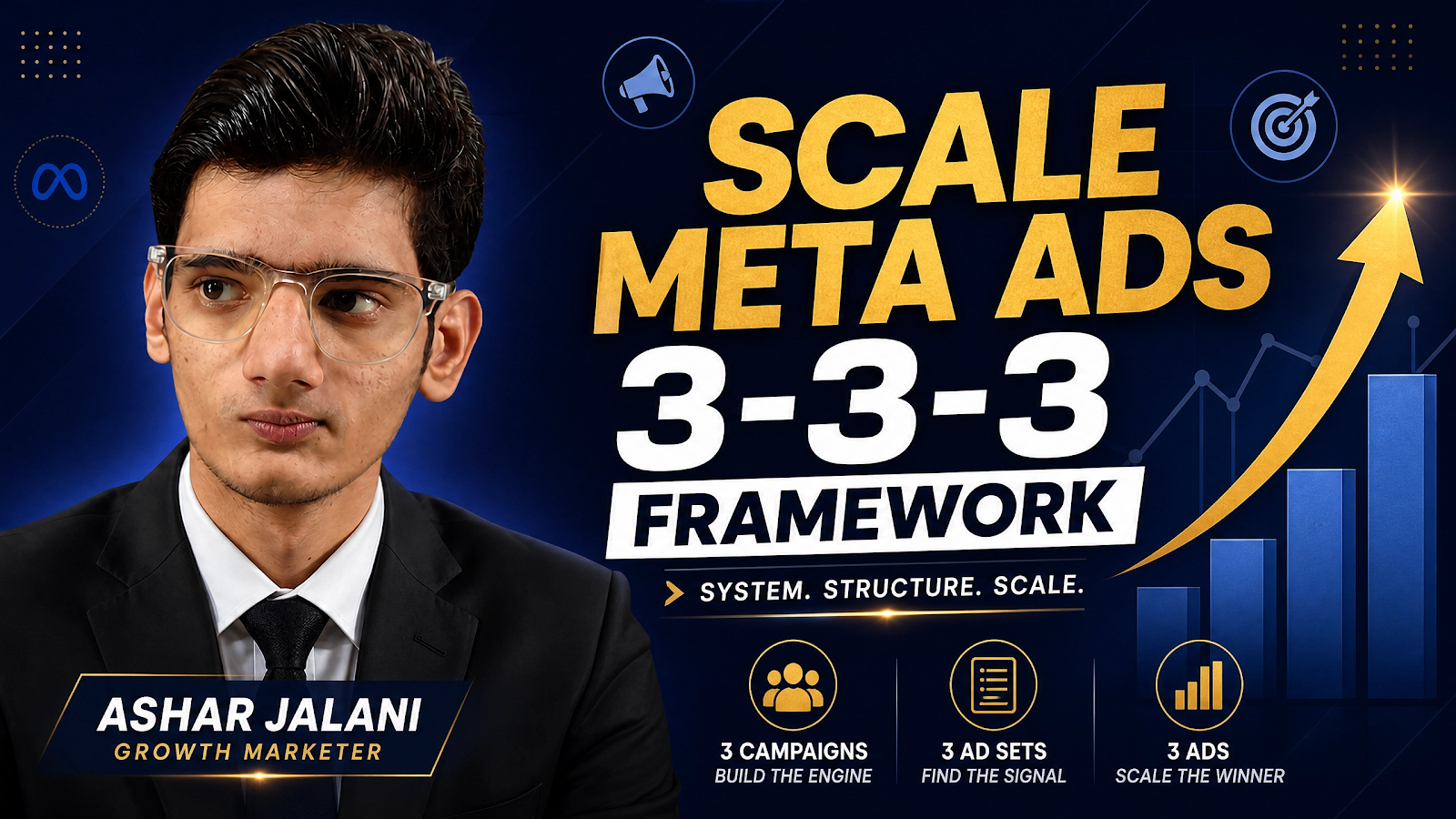
This is the one that compounds the other three. An account with a strong testing structure naturally solves creative fatigue (constant fresh supply) and gives the algorithm enough signal to work with even inside a saturated audience. It’s also exactly the gap that a structured framework — like the 3-3-3 approach (3 hooks × 3 angles × 3 formats) — is built to close. That’s a big enough topic to deserve its own full breakdown, which I’ll cover next.
Cause 4 — Attribution Blind Spots
The problem: Post-iOS 14.5 tracking gaps and weak pixel setup mean the platform is optimizing on incomplete signal — and you may be misreading which creative is actually driving revenue. This is the quietest cause on this list, because it doesn’t look like a plateau. It looks like “creative that just isn’t working,” when the real issue is that you can’t see what’s working.
Signs to watch for:
- Platform-reported ROAS doesn’t match your actual revenue in your backend/CRM
- Relying only on in-platform, last-click attribution
- No server-side (Conversions API) tracking configured
The scale of the problem: without proper server-side tracking, businesses commonly lose visibility on 15–20% of conversions. That’s not a rounding error — it’s enough missing signal to make Meta’s algorithm optimize toward the wrong audiences and creative entirely.
The Fix: A 4-Step Diagnostic Framework
When an account stalls, don’t guess — run this checklist in order:
1. Refresh Cadence Rotate creative every 5–7 days, minimum, on any ad set spending meaningfully. If you can’t produce that volume manually, this is exactly the gap AI creative tools are built to close (see my breakdown on the 5 AI tools that solve this).
2. Consolidate Audiences Broaden targeting and cut overlapping ad sets. In most cases, fewer, broader ad sets outperform many narrow ones once you’ve got enough creative variety feeding them.
3. Structure Testing Replace ad-hoc testing with a systematic hook/angle/format framework. This is the single highest-leverage fix on this list — it solves the creative fatigue problem and the audience problem simultaneously by giving the algorithm what it actually needs: variety with structure.
4. Fix Attribution Implement Conversions API (CAPI) and reconcile platform-reported numbers against your actual backend revenue. You can’t fix what you can’t see — and a lot of “creative problems” are actually measurement problems in disguise.
Where to Start
If you’re staring at a plateaued account right now, don’t try to fix all four at once. Diagnose first:
- If CTR is sliding on your top ads → start with Cause 1 (Creative Fatigue)
- If CPMs are rising but your audience hasn’t grown → start with Cause 2 (Audience Overlap)
- If you’re only launching 1–2 new ads a week → start with Cause 3 (Testing Structure)
- If your platform ROAS never matches your actual revenue → start with Cause 4 (Attribution)
Most plateaued accounts I’ve audited have at least two of these four running at once. Fix the loudest signal first, then work down the list — the compounding effect of fixing all four is what actually gets an account back to scaling, not any single tweak in isolation.
Ashar Jalani is a Google-Certified Growth Marketer helping brands diagnose and scale Meta ad accounts. Connect with him at asharjalani.com.