The exact budget cadence that grows spend without resetting Meta’s algorithm
By Ashar Jalani, Growth Marketer @ DIGIaiX
The moment most winners die
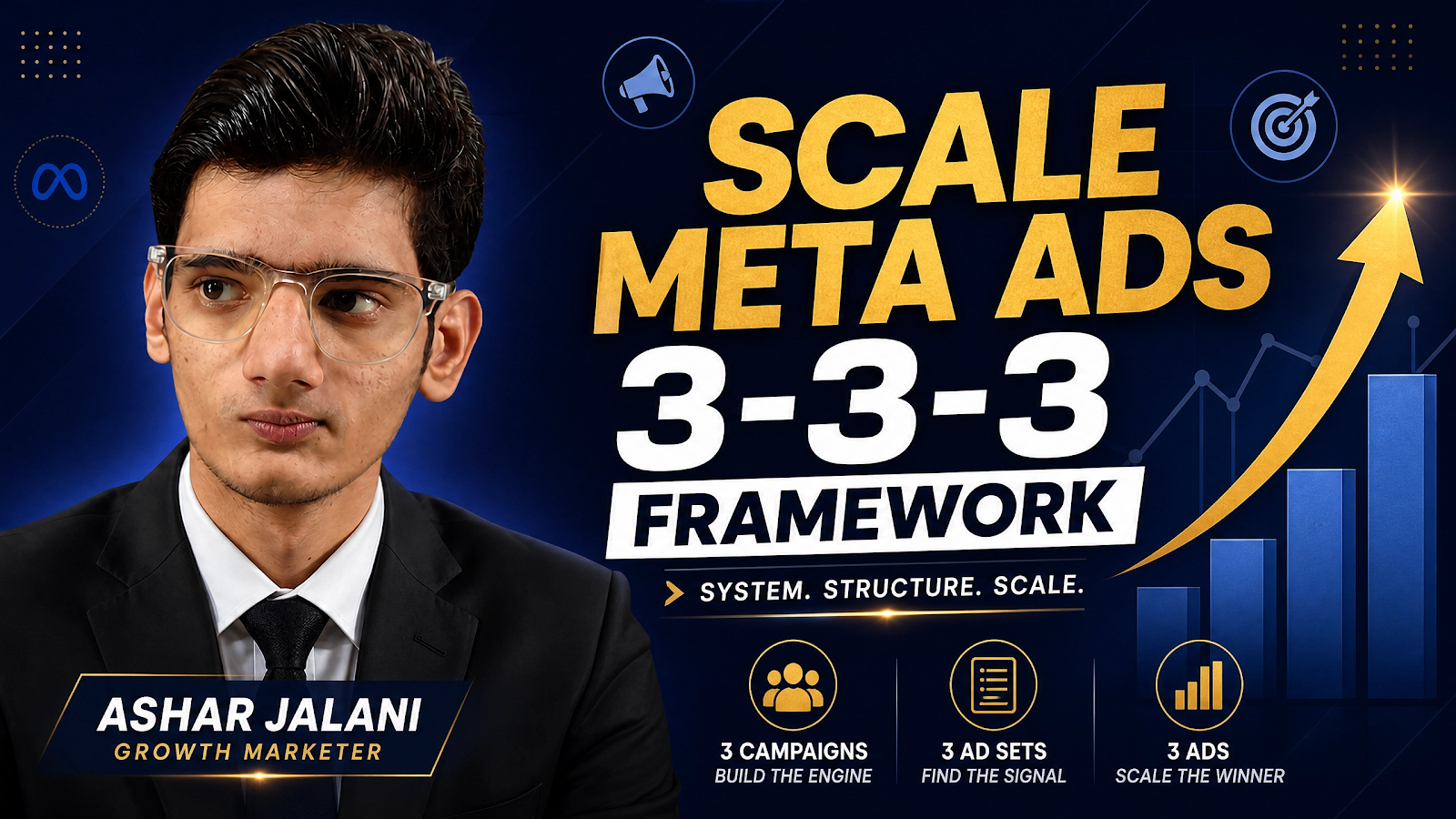
You ran the 3-3-3 Framework. Three campaigns became one. Three ad sets became one. Three ads became one clear winner, stable for days. So you do the obvious thing — you double the daily budget to capitalize on it.
Twenty-four hours later, CPA has spiked. The ad that was converting at $12 is suddenly converting at $28. The “winner” looks like a loser again.
This isn’t bad luck, and it isn’t the algorithm turning against you. It’s a specific, well-understood mechanism: you reset the learning phase.
Understanding why that happens — and the exact cadence that avoids it — is the difference between a winner that compounds and a winner you accidentally kill within 48 hours of finding it.
Why Big Budget Jumps Break a Winning Ad
Meta’s delivery system needs a stable stream of conversion data to keep optimizing toward the right people. As a rough benchmark, an ad set needs somewhere around 50 conversion events per week to stay reliably out of the learning phase and into stable, efficient delivery.
When you make a large, sudden budget change, you disrupt that stability. The algorithm has to re-evaluate who to show your ad to at the new spend level, essentially re-learning your audience from a colder starting point. During that re-learning window, performance is volatile — and if you react to that volatility by pulling budget back down, you never let it finish stabilizing at all.
Signs you’ve triggered this:
- CPA spikes within 24–48 hours of a budget increase
- The ad set shows “Learning” status again after having been stable
- Performance never fully recovers to pre-scale levels, even after several days
The instinct when you see a winner is to move fast. The actual fix is to move in a way the algorithm can absorb.
The Core Rule: The 20% Cadence
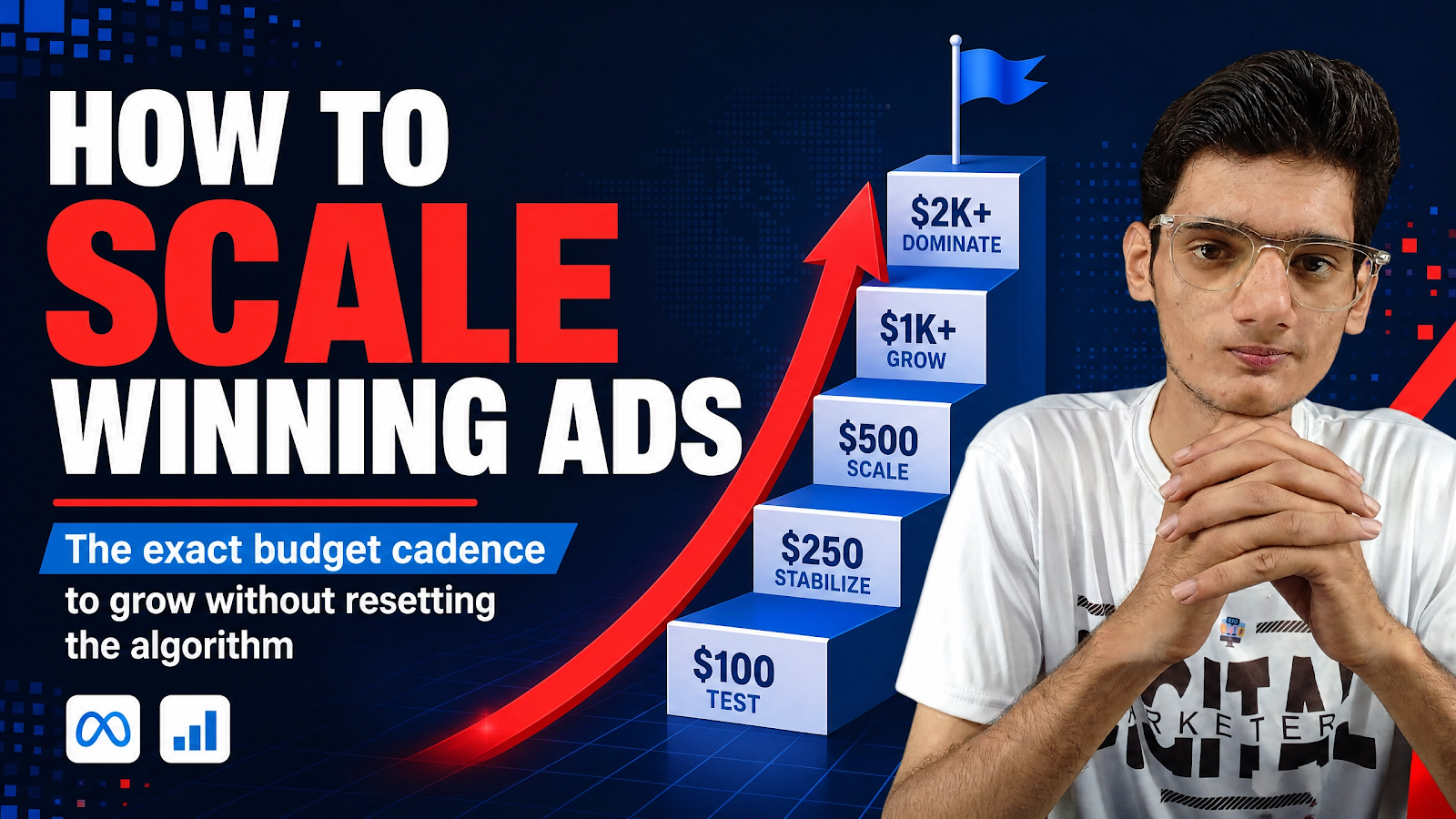
Increase budget by no more than 20–30% at a time, and wait 48–72 hours between increases. That’s the entire rule. It’s simple, but it’s the single highest-leverage habit in scaling.
How to apply it:
- Cap every individual increase at 20–30% of the current budget — not 20–30% of your target end budget, the current one
- Wait a full 48–72 hours before making the next increase
- If CPA rises more than roughly 20% after an increase, hold at the current level and let it stabilize before scaling further — don’t scale again just because time has passed
Why 72 hours specifically: Meta needs approximately one full data cycle to re-stabilize delivery after any budget change. Scaling faster than that means you’re reacting to incomplete data — judging a change before the algorithm has actually finished responding to it. Most “premature panic” pauses on winning ads happen because someone checked performance 12 hours after a budget bump, saw a spike, and killed a perfectly good ad that just needed another day to settle.
Two Paths to Scale: Vertical vs. Horizontal
There are two fundamentally different ways to grow spend on a winner, and the strongest scaling strategies use both.
Vertical scaling — raise budget on the same ad set
- Keeps the proven audience and algorithm data intact
- Simplest path — one lever to pull
- Has a ceiling: hits diminishing returns as the audience saturates
- Every increase still carries some learning-phase risk, even at 20%
Horizontal scaling — duplicate the winner into new ad sets
- No risk to the original winning ad set — it stays completely untouched
- Taps fresh audience pools instead of continuing to saturate one
- New ad sets start from zero data and need their own ramp-up period
- Requires more ad sets to manage and monitor simultaneously
The general pattern: scale vertically until returns start diminishing, then go horizontal. Trying to push one ad set indefinitely just accelerates audience fatigue on top of the learning-phase risk you’re already managing.
CBO vs. ABO — The Structure You Scale Inside
The account structure you’re scaling inside matters just as much as the pacing.
ABO (Ad Set Budget Optimization) — you set the budget manually, per ad set. This is best used early, while you’re still proving a winner. You decide exactly how much each ad set spends, which means you can apply the 20% rule with full precision on the one ad set that actually matters, without Meta’s automatic distribution muddying the signal.
CBO (Campaign Budget Optimization) — Meta automatically shifts budget across ad sets based on real-time performance. This is best used once you have 2–3 proven ad sets worth trusting. CBO is powerful because it lets the algorithm dynamically favor whichever ad set is performing best — but it’s risky to hand over control before you have enough proven inputs, because it will happily pour budget into an ad set that looks good on noisy, early data.
Rule of thumb: prove it in ABO, then scale it in CBO.
The Scaling Ladder: A Step-by-Step Cadence
Once a winner is confirmed, here’s the exact sequence to follow:
1. Confirm the winner. Require 3+ days of stable CPA from the Tier 3 test in the 3-3-3 Framework before touching budget at all. One good day is not confirmation.
2. First increase: Day 2–3. Raise budget by 20%. Don’t touch creative or targeting at the same time — you want to isolate the effect of the budget change alone.
3. Second increase: Day 5–6. If CPA held steady through the first increase, raise another 20–30%. If it rose, hold at the current level and wait before scaling further.
4. Go horizontal. Once vertical increases start showing diminishing returns — CPA creeping up even with the 20% cadence — stop pushing that ad set’s budget further and duplicate the winner into a fresh ad set instead.
5. Keep a control. Always leave the original winning ad set untouched as a benchmark while you scale its duplicates elsewhere. If a duplicate underperforms, you’ll know immediately because you still have the original to compare against.
The Real Takeaway
Scaling isn’t a single decision — it’s a cadence. The accounts that scale winners successfully aren’t the ones with the most aggressive budget increases; they’re the ones with the most disciplined pacing. Every time you feel the urge to double a budget overnight because a winner is performing, that’s exactly the moment to slow down to 20%.
The winner already proved itself. Your job now is just not to get in its way.
Ashar Jalani is a Google-Certified Growth Marketer helping brands scale Meta ad accounts without losing their best-performing creative in the process. Connect with him at asharjalani.com.